Move from an adjective to a condition
Words such as easy, quick, and robust express an intention, but people may interpret them differently. A requirement becomes easier to assess when it describes an observable behavior under stated conditions.
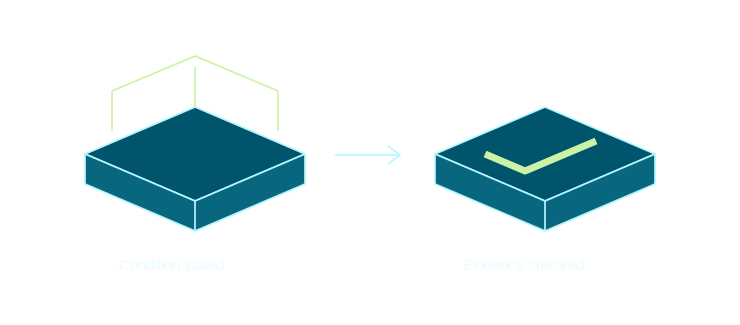
Think about the object being described, what it must do, and the circumstances in which that behavior matters. A check also needs a clear basis for deciding whether the expectation has been met.
Hypothetical example
A drawer that opens fully
“The drawer must be convenient” leaves several questions unresolved. A more focused statement might require a drawer to reach a specified opening distance while carrying a defined load, in a stated mounting arrangement.
The particular distance and load would need to come from the intended use. They cannot be chosen merely because they are easy to measure. A check could then record the actual arrangement and the observed opening distance. This example describes a way to frame a question, not a specification for a real product.
Keep the statement linked to the evidence
A useful record connects a requirement to the check that addresses it. If the load or mounting condition changes, that connection helps explain why earlier evidence may need to be reconsidered.
Keep separate expectations distinct. Opening distance and resistance to accidental opening concern different behaviors. Combining them into one sentence can make it harder to see which part has been assessed.
Finally, distinguish meeting a written requirement from meeting a person's underlying need. A drawer could satisfy its specified dimensions and still be awkward in the room where it will be used. Clear verification supports judgment; it does not replace the work of understanding the setting.
Background reading: IBM's introduction to requirements management.